Snake plant care
Takes almost any light and long dry spells. Too much water is the one thing it does not forgive.
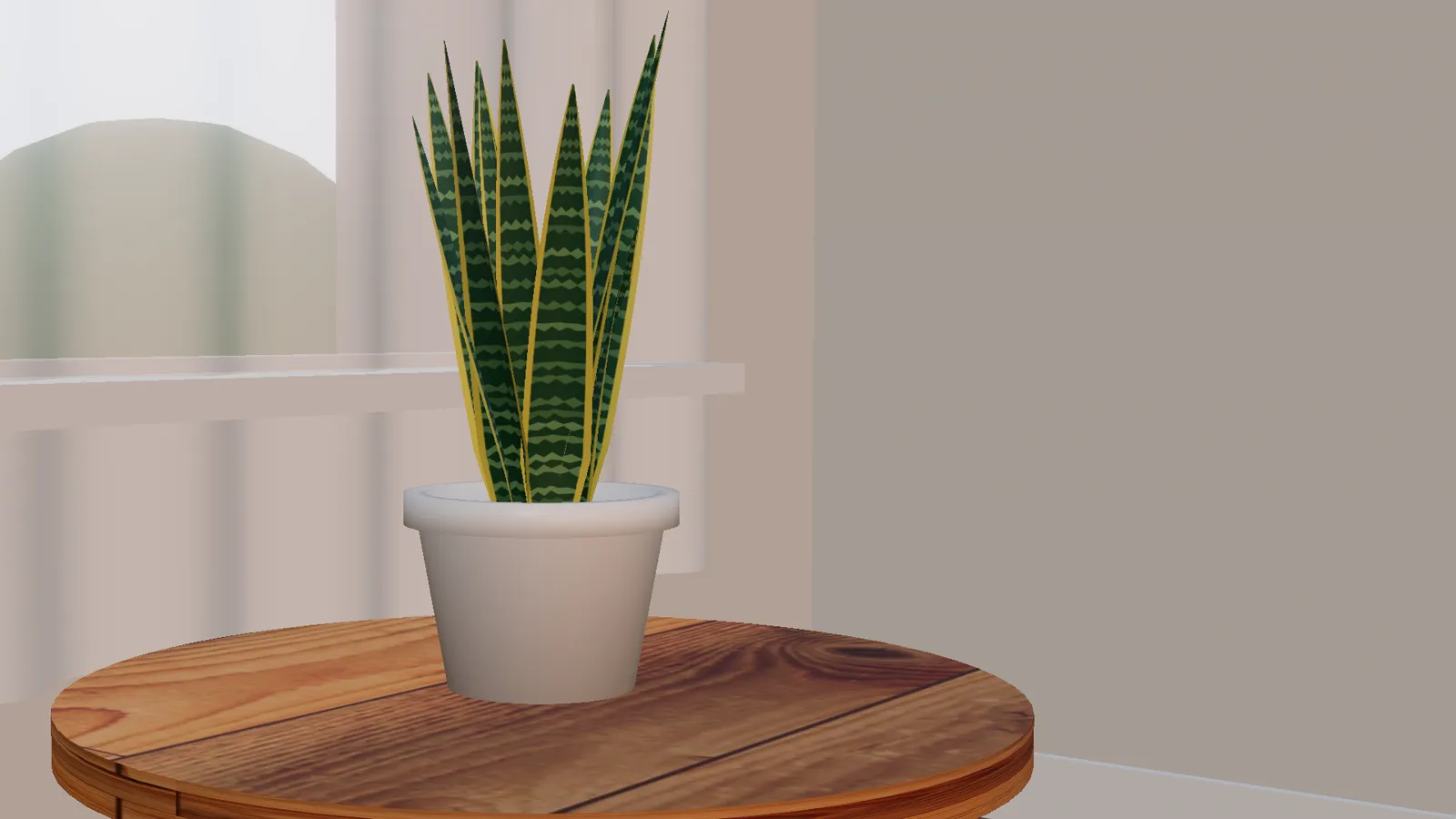
What matters most
Quick facts
| Botanical name | Dracaena trifasciata (Sansevieria trifasciata)[2][4] |
|---|---|
| Light |
Grows in: bright direct light, bright indirect light, medium light, low light. Grows in anything from low light to direct light.[2][5] |
| Watering | Only when the soil is dry; overwatering is the main killer.[2] |
| Cats and dogs | Toxic[4][6] |
| Humidity | Likes low humidity. Never mist it, and keep it out of steamy bathrooms.[3] |
| Temperature | Ideally 60 to 75°F (15 to 24°C). It tolerates cool rooms of around 50°F (10°C).[3][1] |
| Potting mix | A free-draining cactus mix.[3] |
| Feeding | Once a month in the growing season, with an all-purpose fertilizer at half strength.[7] |
Check your own plant. Both tools open with this plant already picked.
What makes snake plant different
- Its leaves are its water tank. In winter, growth slows and the plant draws on the water stored in its fleshy leaves.[3] That is why it needs so little water then.
- Light changes its shape. Plants in shade often grow taller leaves; plants in sun tend to stay more compact.[3]
- The pattern depends on how you propagate. Divided plants keep their leaf pattern, but leaf cuttings may produce plain green leaves.[2][3]
- A new name. Genetic research moved snake plant from Sansevieria into the genus Dracaena.[7]
- Rarely blooms indoors. In the wild it blooms in winter, but as a houseplant it rarely does.[1]
- Handle with care. The sap irritates skin, so take care when cutting it.[3]
Common snake plant problems
- Root rot: a common affliction of snake plants, caused by overwatering.[7][1]
- Mealybugs: these sap-sucking insects hide between the leaves at the base.[3] Also watch for spider mites.[1]
- Scorched leaves: from midday summer sun.[3]
Repotting and propagation
Repot rarely. Snake plants like a snug pot and need a bigger one only once roots and leaves have completely filled the old one.[3] Penn State Extension suggests fresh potting mix about every 5 years, and a heavy pot for tall kinds, which can tip over.[7]
Divide it, the easiest way to get more plants:[7] take the plant out of its pot and split the clump into several pieces.[3] Leaf cuttings also work: slice a mature leaf widthways into 2 inch (5 cm) sections. Cuttings from variegated kinds tend to revert to green.[3]
Common questions
How often should I water a snake plant?
From spring to fall, whenever the soil has dried out. In winter, only every one to two months. Test the soil with a finger rather than watering on a schedule.
Why is my snake plant soft and mushy at the base?
Almost always overwatering, which rots the roots. Iowa State Extension puts it plainly: overwatering is the only way to kill this plant.
Is it a Sansevieria or a Dracaena?
Both names refer to the same plant. Genetic research moved snake plant into the genus Dracaena, so newer labels say Dracaena trifasciata.
Is snake plant safe for cats and dogs?
No. The ASPCA lists it as toxic to cats and dogs.
Sources
Each numbered link on this card points to one of these pages, each opened and read on the date shown. How we check facts.
- Dracaena trifasciata | North Carolina Extension Gardener Plant ToolboxNC State Extension. Checked .
- Easy Low-Maintenance HouseplantsIowa State University Extension and Outreach. Checked .
- How to grow sansevieriasRoyal Horticultural Society. Checked .
- Toxic and Non-Toxic Plant List: CatsASPCA. Checked .
- Indoor Plants: Cleaning, Fertilizing, Containers and Light RequirementsClemson Cooperative Extension, Home & Garden Information Center. Checked .
- Toxic and Non-Toxic Plant List: DogsASPCA. Checked .
- Snake Plant: A Forgiving, Low-maintenance HouseplantPenn State Extension. Checked .