Pothos care
A trailing vine that copes with low light and the odd missed watering, but not with soggy soil.
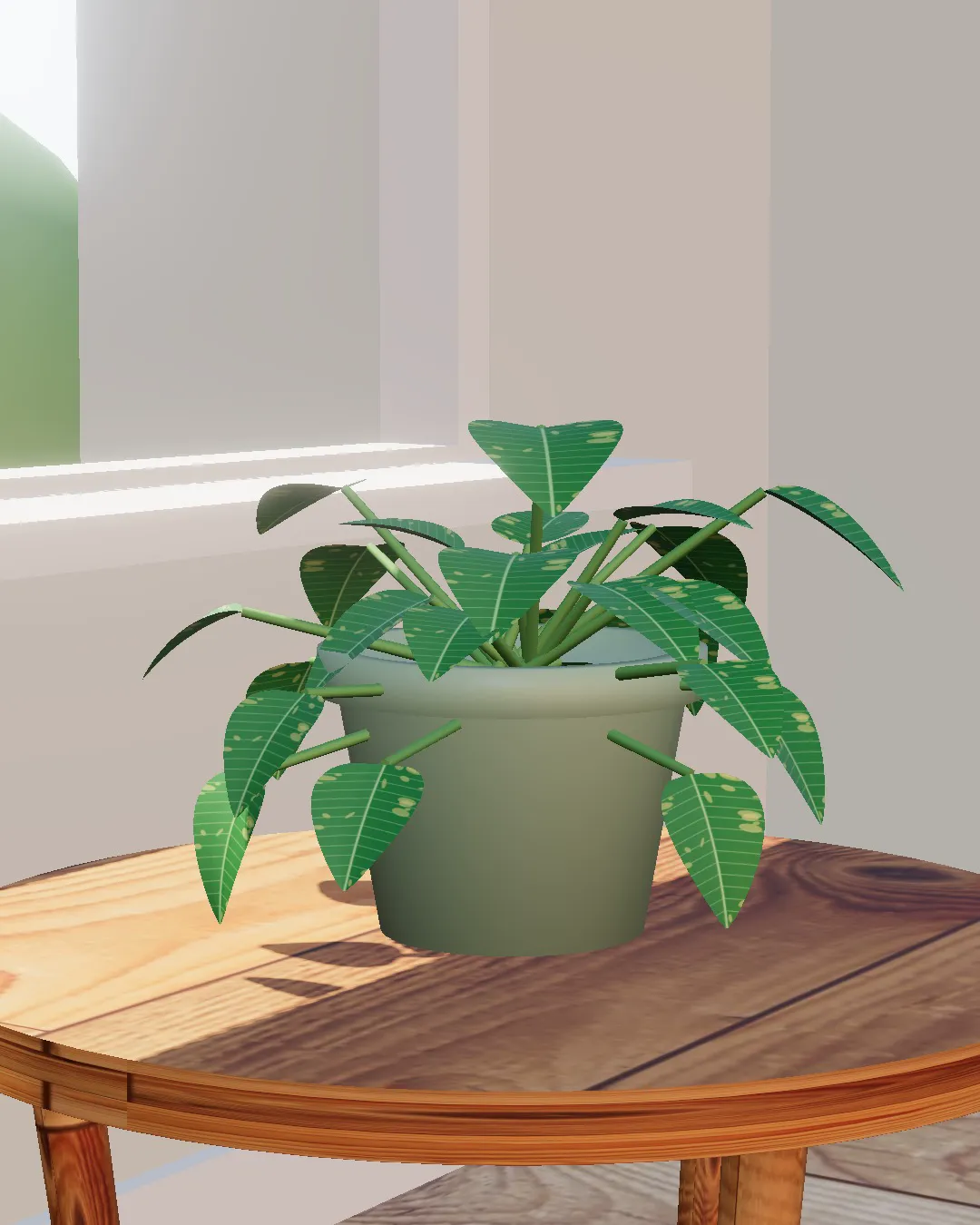
What matters most
- Let the soil dry between waterings, then water thoroughly so it reaches all the roots. Overwatering is what rots pothos roots.[1][2]
- Bright, indirect light is best. It survives long spells in low light, but variegated leaves fade toward plain green there.[2][3]
- Keep it out of direct summer sun, which can scorch the leaves.[3]
Quick facts
| Botanical name | Epipremnum aureum[1] |
|---|---|
| Light | Grows best in: bright indirect light. Grows in: bright indirect light, medium light, low light. Variegated kinds can lose some color in low light.[1][4] |
| Watering | Water once the soil is completely dry.[1] |
| Cats and dogs | Toxic[5][6] |
| Humidity | Prefers 50 to 70%, but tolerates the 30 to 60% found in an average home. Unlike many tropical plants, it does not need high humidity.[1][3] |
| Temperature | 60 to 70°F (16 to 21°C) at night and 70 to 85°F (21 to 29°C) during the day.[1] |
| Potting mix | An airy, well-draining mix.[1] |
| Feeding | Houseplant fertilizer every other month in spring and summer, none in winter.[1][2] |
Check your own plant. Both tools open with this plant already picked.
What makes pothos different
- Small leaves in a pot, big leaves on a pole. As a container plant it generally keeps its juvenile leaf shape. Given a support to climb and enough light, it begins to produce large, mature leaves.[2]
- It climbs with aerial roots. Roots grow from the stems and grip whatever the vine climbs.[2] On a moss or coir pole, keep the pole damp so the roots attach to it.[3]
- Bare stems are normal with age. Older leaves yellow and fall over time, so most of the leaves end up near the tips of the stems.[2] Shorten long stems by cutting just above a leaf.[3]
- Grooved leaf stalks. The main difference from philodendron: pothos leaf stalks are grooved, philodendron stalks are smooth.[1]
- Almost never flowers indoors. Pothos rarely flowers.[2]
Common pothos problems
- Root rot: overwatering can rot the roots and blacken the leaf edges.[2][3]
- Yellow leaves: usually overwatering or low fertility.[1]
- Scorched leaves and dying tips: often low humidity or intense light.[1]
- Pests: generally pest-free indoors, but can get spider mites and mealybugs;[1] watch for scale too.[2]
Repotting and propagation
Repot when roots show through the drainage holes or the plant is crowded and root-bound. Clemson Extension says most pothos need it every year or two;[1] the RHS says every two or three years, into a pot one size larger.[3]
Propagate from stem cuttings. Each cutting needs at least one node, and roots easily in soil or water.[1] Stems readily root from the leaf joints: stand cuttings in a glass of water in a bright spot until roots appear, then pot them up.[3]
Common questions
Why are my pothos leaves so small?
Pothos grown in a pot usually keep their small juvenile leaves. Give the vine a support to climb and enough light, and it starts to make larger, mature leaves.
Can pothos grow in water?
Stem cuttings root easily in a glass of water, as long as each has at least one node. Once roots appear, the RHS suggests potting them up.
Why is my pothos losing its variegation?
Too little light. Low light can cause pothos to lose its variegation. Move it closer to a bright window, but out of direct summer sun.
Is pothos safe for cats and dogs?
No. The ASPCA lists pothos as toxic to both cats and dogs.
How do I tell pothos from heartleaf philodendron?
Look at the leaf stalks. On pothos they are grooved; on heartleaf philodendron they are smooth.
Sources
Each numbered link on this card points to one of these pages, each opened and read on the date shown. How we check facts.
- How to Grow Pothos Indoors (Epipremnum spp.): Care, Cultivars, and Common ProblemsClemson Cooperative Extension, Home & Garden Information Center. Checked .
- Epipremnum aureum | North Carolina Extension Gardener Plant ToolboxNC State Extension. Checked .
- How to grow epipremnumRoyal Horticultural Society. Checked .
- Easy Low-Maintenance HouseplantsIowa State University Extension and Outreach. Checked .
- Toxic and Non-Toxic Plant List: CatsASPCA. Checked .
- Toxic and Non-Toxic Plant List: DogsASPCA. Checked .