Monstera care
A big climbing plant whose famous leaf holes only come with age, climbing and enough light.
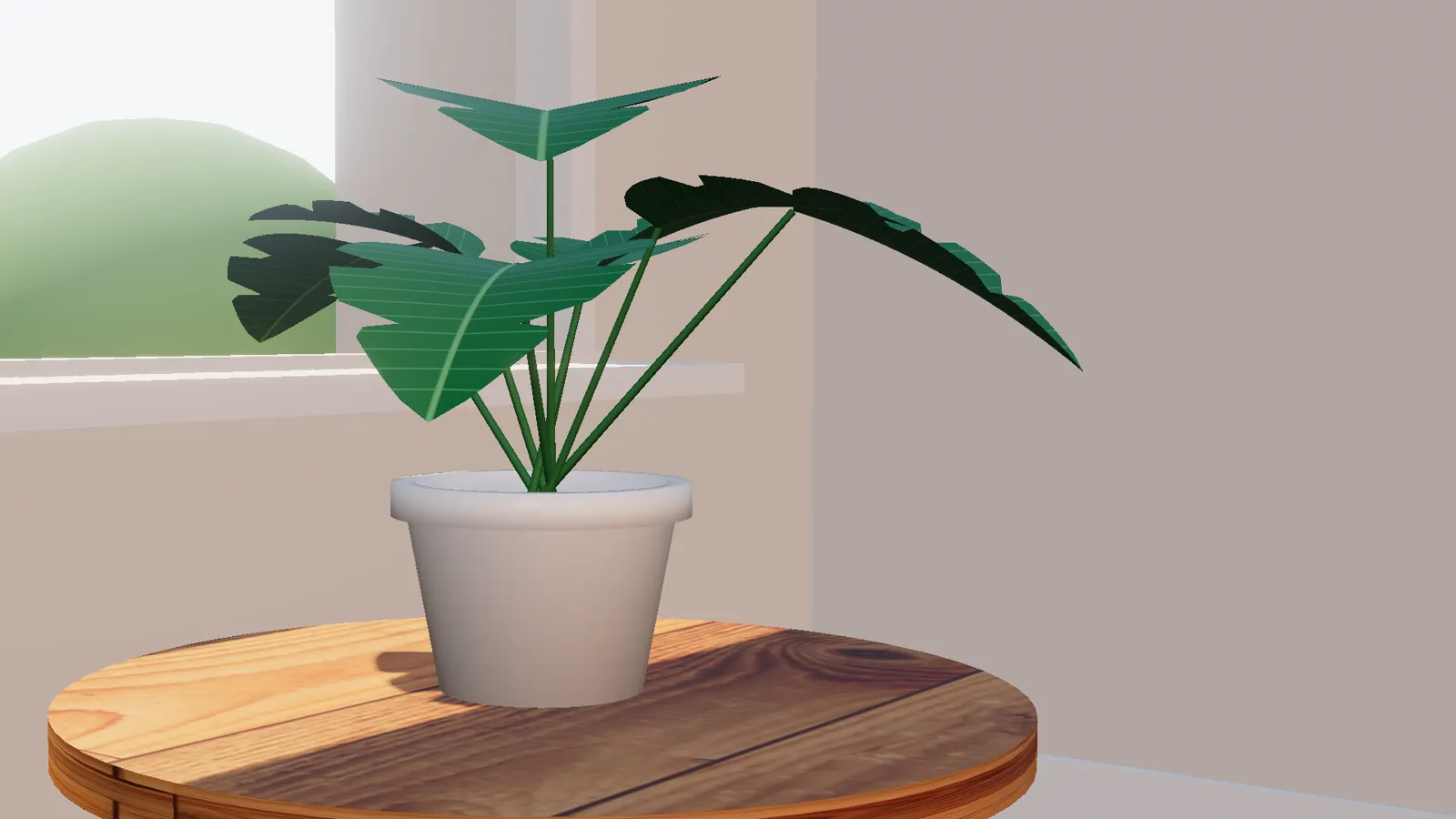
What matters most
- Let the mix get almost dry, then water thoroughly. Never leave the pot sitting in a saucer of water, or the roots can rot.[1]
- Give it indirect light, such as by an east or west window. Direct sun can scorch the leaves, and very low light means fewer holes.[1]
- Tie it to a moss pole. Once it is climbing it makes larger leaves with more holes.[1]
Quick facts
| Botanical name | Monstera deliciosa[2] |
|---|---|
| Light | Grows best in: bright indirect light. Grows in: bright indirect light, medium light, low light. Tolerates low light, but new leaves have fewer holes. Direct sun can scorch the leaves.[1][2][3] |
| Watering | When the mix is almost dry, water thoroughly; never leave it in water.[1] |
| Cats and dogs | Toxic[4][5] |
| Humidity | Likes humid air, preferably above 50%.[6] |
| Temperature | Warm all year, at 65 to 77°F (18 to 25°C), away from cold drafts and radiators. It stops growing below 50°F (10°C).[1][7] |
| Potting mix | Open and well-drained. The roots easily rot in a mix that drains poorly.[1] |
| Feeding | A balanced liquid fertilizer through the growing season, April to September.[1] |
| Size | Up to 70 feet (21 m) in the wild, but usually 6 to 8 feet (1.8 to 2.4 m) in a home.[8] |
Check your own plant. Both tools open with this plant already picked.
What makes monstera different
- The holes come with maturity. Leaves usually show the holes only once plants are a few years old,[1] and only mature leaves have them.[8] Young leaves are small, green and mostly uncut.[6]
- Climbing makes bigger leaves. When the plant feels it is climbing, it often produces larger, more mature leaves with more holes (called fenestrations).[1]
- Aerial roots are its climbing gear. In the wild, its long, tentacle-like aerial roots attach to branches and tree trunks.[7] Indoors, it roots into a moss pole if you keep the moss moist.[1]
- Wet leaves are a warning. The leaves "sweat" when the mix is too moist; water less to prevent root rot.[7]
- Pruning resets the holes. Cut a plant back and its new stems will usually have smaller leaves with fewer holes until it settles down again.[1]
- Not a real philodendron. Despite the name split-leaf philodendron, it is not actually a philodendron, though both belong to the arum family.[8][2] As a houseplant it does not flower or fruit.[9]
Common monstera problems
- Root rot and collapse: from overwatering or a mix that drains poorly.[1]
- Brown leaf edges: the air is too dry, which is common in centrally heated homes.[1][7]
- Pests: mealybugs can leave a sticky residue;[1] aphids, scale and spider mites are also possible.[7]
- Sunburn: when moved outdoors for summer without getting used to the brighter light gradually.[7]
Repotting and propagation
Repot after the first year or two, then every few years. Pick a pot heavy enough not to topple, since big plants get top-heavy, and only a little wider than the root ball.[1]
Take stem cuttings from spring to late summer and stand them in a glass of water in a bright spot until they have a good set of roots, then pot them up.[1] Every cutting must include a node; new leaves can take 2 to 3 months to form.[9]
Common questions
Why does my monstera have no holes in its leaves?
Either the plant is still young or the light is too low. Holes usually show only once a plant is a few years old, and in very low light leaves have fewer of them.
What should I do with the aerial roots?
Guide them onto a moss pole. Keep the moss moist and the plant will root into it, which also holds this top-heavy plant upright.
Can I grow a monstera from a single leaf?
No. A cutting needs a node. A leaf on its own will not produce new growth and ends up rotting.
Why are drops of water forming on my monstera's leaves?
The leaves sweat when the potting mix stays too moist. Water less often to prevent root rot.
Is monstera safe for cats and dogs?
No. The ASPCA lists Swiss cheese plant as toxic to cats and dogs.
Sources
Each numbered link on this card points to one of these pages, each opened and read on the date shown. How we check facts.
- How to grow Swiss cheese plantsRoyal Horticultural Society. Checked .
- PhilodendronClemson Cooperative Extension, Home & Garden Information Center. Checked .
- Indoor Plants: Cleaning, Fertilizing, Containers and Light RequirementsClemson Cooperative Extension, Home & Garden Information Center. Checked .
- Toxic and Non-Toxic Plant List: CatsASPCA. Checked .
- Toxic and Non-Toxic Plant List: DogsASPCA. Checked .
- Monstera as a HouseplantPenn State Extension. Checked .
- Swiss-Cheese Plant, Monstera deliciosaUniversity of Wisconsin-Madison Extension. Checked .
- Monstera deliciosa | North Carolina Extension Gardener Plant ToolboxNC State Extension. Checked .
- Monstera deliciosaUniversity of Minnesota Extension. Checked .