Chinese evergreen care
One of the toughest houseplants for a dim room. Its one weak spot is cold: chilly air and cold water both hurt it.
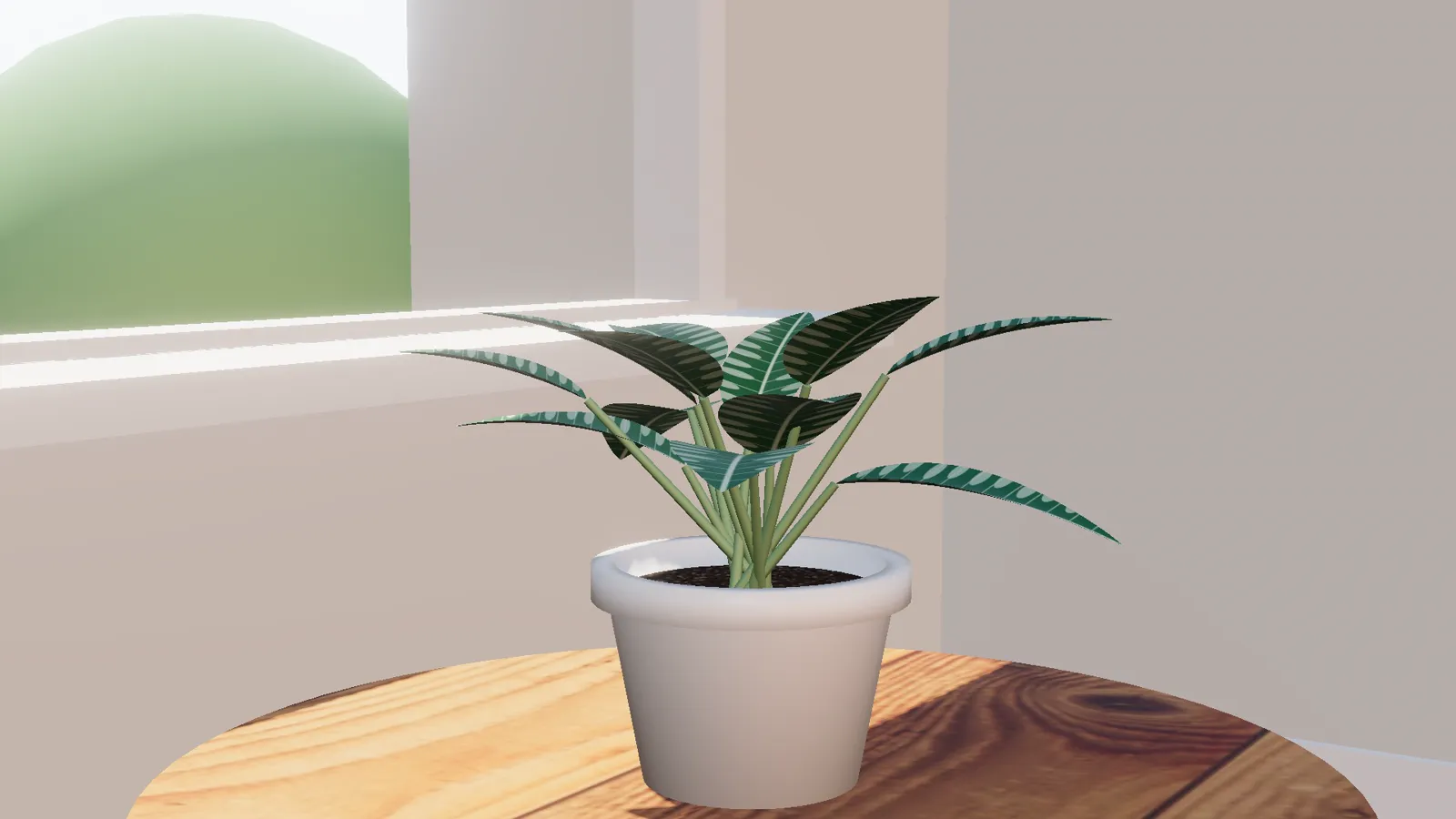
What matters most
Quick facts
| Botanical name | Aglaonema species[1] |
|---|---|
| Light | Grows best in: medium light, low light. Grows in: bright indirect light, medium light, low light. Prefers low to moderate indirect light and dislikes direct sun on its leaves.[1][2][3] |
| Watering | Moist, not wet: water once the top 1 to 2 inches (2.5 to 5 cm) are dry.[1] |
| Cats and dogs | Toxic ASPCA lists Aglaonema modestum as toxic.[4][5] |
| Humidity | Tolerates low humidity but prefers moderate.[1] |
| Temperature | Best at 68 to 80°F (20 to 27°C). Avoid going below 55°F (13°C).[1] |
| Potting mix | A standard soilless mix with extra humus, in a pot with drainage holes.[1] |
| Feeding | Light. Too much fertilizer builds up salts and burns the leaf edges and tips.[1][6] |
| Size | 1 to 3 feet (30 to 90 cm) tall and wide.[1] |
Check your own plant. Both tools open with this plant already picked.
What makes Chinese evergreen different
- Built to take neglect. It is one of the most durable houseplants, tolerating poor light, dry air, air conditioning and drought.[1]
- Green kinds take the least light. Solid green cultivars grow in low light; variegated ones need low to moderate light.[1]
- Cold shows as greasy spots. Chilling injury appears as gray spots that turn dark and greasy, 3 to 7 days after exposure to temperatures below 50 to 55°F, starting with older leaves.[6]
- Flowers are best removed. It flowers with a spathe and spadix, and red berries can follow, though rarely depending on light.[7] Removing the flowers helps the plant last and stay full.[6][8]
- Gets leggy with age. The stem lengthens over time.[8] If the lower stem goes bare, the top can be cut off and rooted.[1]
- Count the veins. Only 5 to 8 main side veins per leaf set it apart from dumb cane (Dieffenbachia).[8]
Common Chinese evergreen problems
- Root rot: overwatering or a slow-draining mix. Let the mix dry a little between waterings and avoid cold water.[1][8]
- Chilling injury: dark, greasy spots after cold (see above).[6]
- Brown leaves: very dry air or a drafty spot.[8]
- Brown, brittle leaf tips: high soluble salts in the soil. Flush the soil and feed less.[6]
- Leaf scorch: too sunny a spot.[7]
- Pests: mealybugs, aphids, scale and mites.[1]
Propagation
When the stems get too long, take tip cuttings, or use air layering.[9] Rooting cuttings and dividing off the basal shoots, or suckers, are the main ways to get new plants.[6]
Common questions
Is Chinese evergreen a good plant for a dim room?
Yes. Clemson Extension calls it one of the most durable houseplants, tolerant of poor light. Solid green kinds grow in low light; variegated kinds need low to moderate light.
Why does my Chinese evergreen have gray, greasy spots?
That is chilling injury. It shows 3 to 7 days after the plant sits below about 50 to 55°F, starting on older leaves. Remove the damaged leaves and move it somewhere warmer.
Should I cut off the flowers?
UF/IFAS and NC State both suggest removing them, so the plant puts its energy into leaves and stays full.
Is Chinese evergreen safe for cats and dogs?
No. The ASPCA lists Aglaonema modestum as toxic to cats and dogs.
Sources
Each numbered link on this card points to one of these pages, each opened and read on the date shown. How we check facts.
- Chinese Evergreen (Aglaonema) Care, Cultivation & Growing GuideClemson Cooperative Extension, Home & Garden Information Center. Checked .
- Lighting for Indoor PlantsUniversity of Maryland Extension. Checked .
- Indoor Plants: Cleaning, Fertilizing, Containers and Light RequirementsClemson Cooperative Extension, Home & Garden Information Center. Checked .
- Toxic and Non-Toxic Plant List: CatsASPCA. Checked .
- Toxic and Non-Toxic Plant List: DogsASPCA. Checked .
- Cultural Guidelines for Commercial Production of Interiorscape Aglaonema (ENH957)UF/IFAS Extension. Checked .
- Aglaonema spp.: Chinese Evergreen, Aglaonema (FPS25)UF/IFAS Extension. Checked .
- Aglaonema | North Carolina Extension Gardener Plant ToolboxNC State Extension. Checked .
- Chinese Evergreen (Houseplants)University of Illinois Extension. Checked .