Aloe vera care
A succulent that stores water in its thick leaves. Give it a bright window, a gritty mix and very little water, especially in winter.
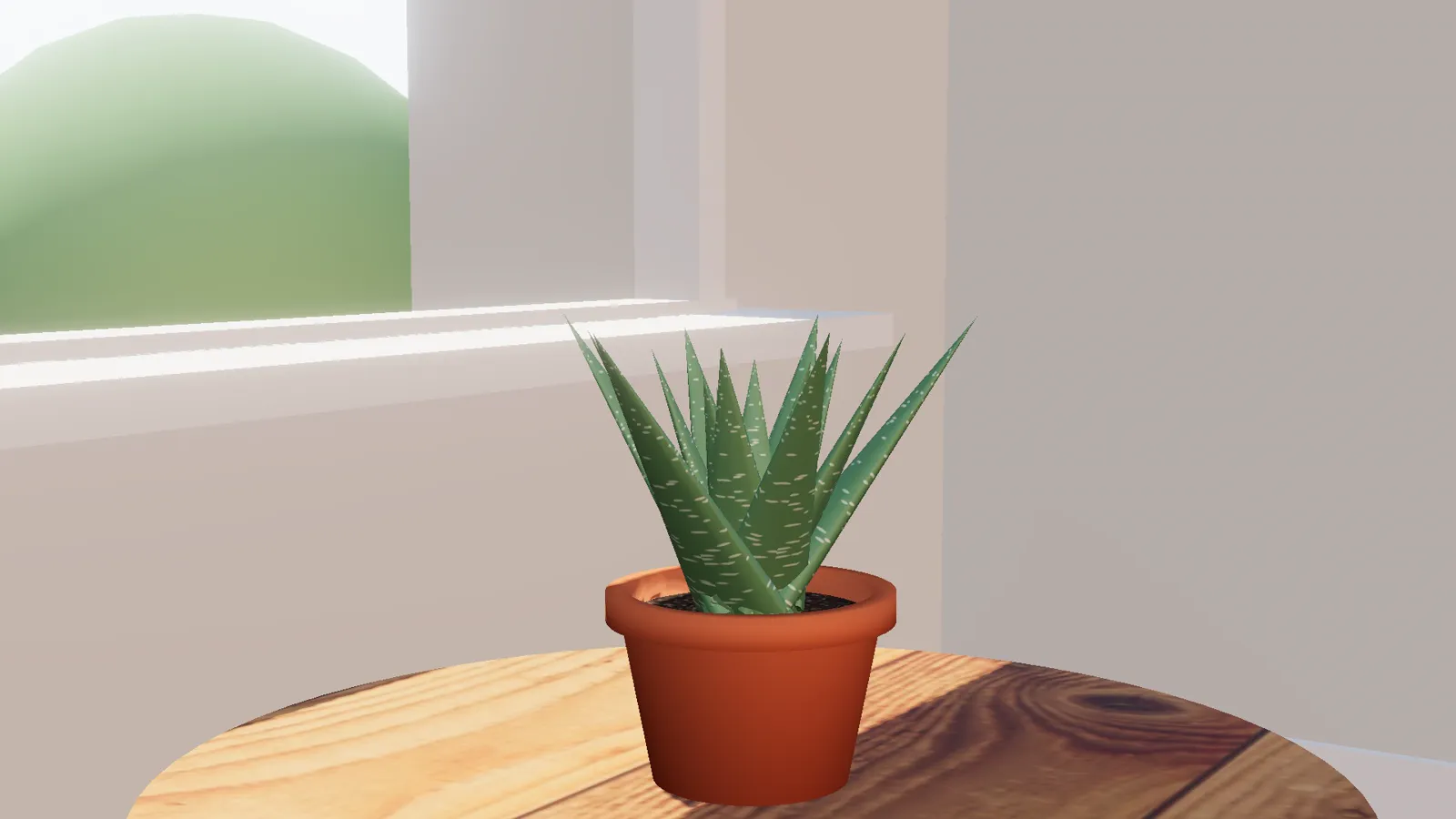
What matters most
- Water deeply but rarely, letting the mix dry out completely in between. Overwatering is the most common problem and leads to root rot.[1]
- In winter, cut watering to a minimum while the plant rests.[1]
- Use a gritty, fast-draining mix and a pot with large drainage holes, and never let it sit in water.[2]
Quick facts
| Botanical name | Aloe vera[1] |
|---|---|
| Light | Grows best in: bright indirect light. Grows in: bright indirect light. Near a south or west window, but out of harsh direct sun, which can brown the leaves.[1][3] |
| Watering | Rarely and deeply, once the mix is completely dry.[1] |
| Cats and dogs | Toxic[4][5] |
| Humidity | No need for high humidity. Do not mist the leaves, which raises the risk of rot.[1] |
| Temperature | 55 to 81°F (13 to 27°C), away from cold drafts and frost.[1] |
| Potting mix | Coarse and well-draining, such as cactus mix, or equal parts potting soil, sand and perlite. Use a pot with large drainage holes.[2] |
| Feeding | Sparingly: a general liquid fertilizer at half strength, once in spring and again in late summer.[1] |
Check your own plant. Both tools open with this plant already picked.
What makes aloe vera different
- Gel and latex. The soft leaves hold a gel-like sap, and just beneath the outer skin a layer of cells makes a bitter latex.[2] NC State notes the latex can irritate skin; test a small patch of skin before using the gel.[6]
- It makes its own pups. Aloe spreads by offsets, small plants that form at its base.[6][7]
- Flowers only with age. Once a plant is at least three years old, it can send up a stem of tubular orange to yellowish flowers, and it can bloom many times in its life.[6]
- Turn it now and then. Rotate the pot from time to time so every side gets enough light.[2]
- Clay pots suit it. NC State says the pot should have several drainage holes, and clay is best.[6]
Common aloe vera problems
- Root rot: from overwatering, the most common aloe problem.[1][6]
- Browned leaves: harsh direct sun.[1]
- Pests: scale, mealybugs and red spider mites,[1] and aphids.[6]
Repotting and propagation
Repot every 2 to 3 years, or when it becomes root-bound, into a succulent mix.[1] Choose a pot that leaves 1 to 1.5 inches (2.5 to 4 cm) between the root ball and the rim, and set the plant so its leaves sit just above the soil.[2]
Pot up offsets in spring or early summer.[8] Cut each one away from the parent with a sharp knife, making sure it has roots, and pot it up right away.[7]
Common questions
How often should I water aloe vera?
Only when the mix has dried out completely, then water deeply. In winter, water so little that the soil is barely moist and the leaves do not shrivel. When unsure, underwater.
Why is my aloe turning brown?
Harsh direct sun can brown the leaves. Keep it near a south or west window, but out of the strongest sun.
Does aloe vera flower indoors?
Only mature plants flower, once they are at least three years old, sending up a stalk of orange to yellowish tubular flowers.
Is aloe vera safe for cats and dogs?
No. The ASPCA lists aloe as toxic to cats and dogs.
Sources
Each numbered link on this card points to one of these pages, each opened and read on the date shown. How we check facts.
- Care tips for light-loving houseplants (RHS Urban Show 2024)Royal Horticultural Society. Checked .
- Aloe, a Hardy HouseplantPenn State Extension. Checked .
- Indoor Plants: Cleaning, Fertilizing, Containers and Light RequirementsClemson Cooperative Extension, Home & Garden Information Center. Checked .
- Toxic and Non-Toxic Plant List: CatsASPCA. Checked .
- Toxic and Non-Toxic Plant List: DogsASPCA. Checked .
- Aloe vera | North Carolina Extension Gardener Plant ToolboxNC State Extension. Checked .
- Specialized Structures (Houseplants)University of Illinois Extension. Checked .
- Aloe vera (Barbados aloe)Royal Horticultural Society. Checked .